14 September 2026 · 7 min read
The things I learned to leave alone
On discernment, desire, love, and the quiet power of choosing yourself.
 Rajdeep BrarFounder, T.A.L.K.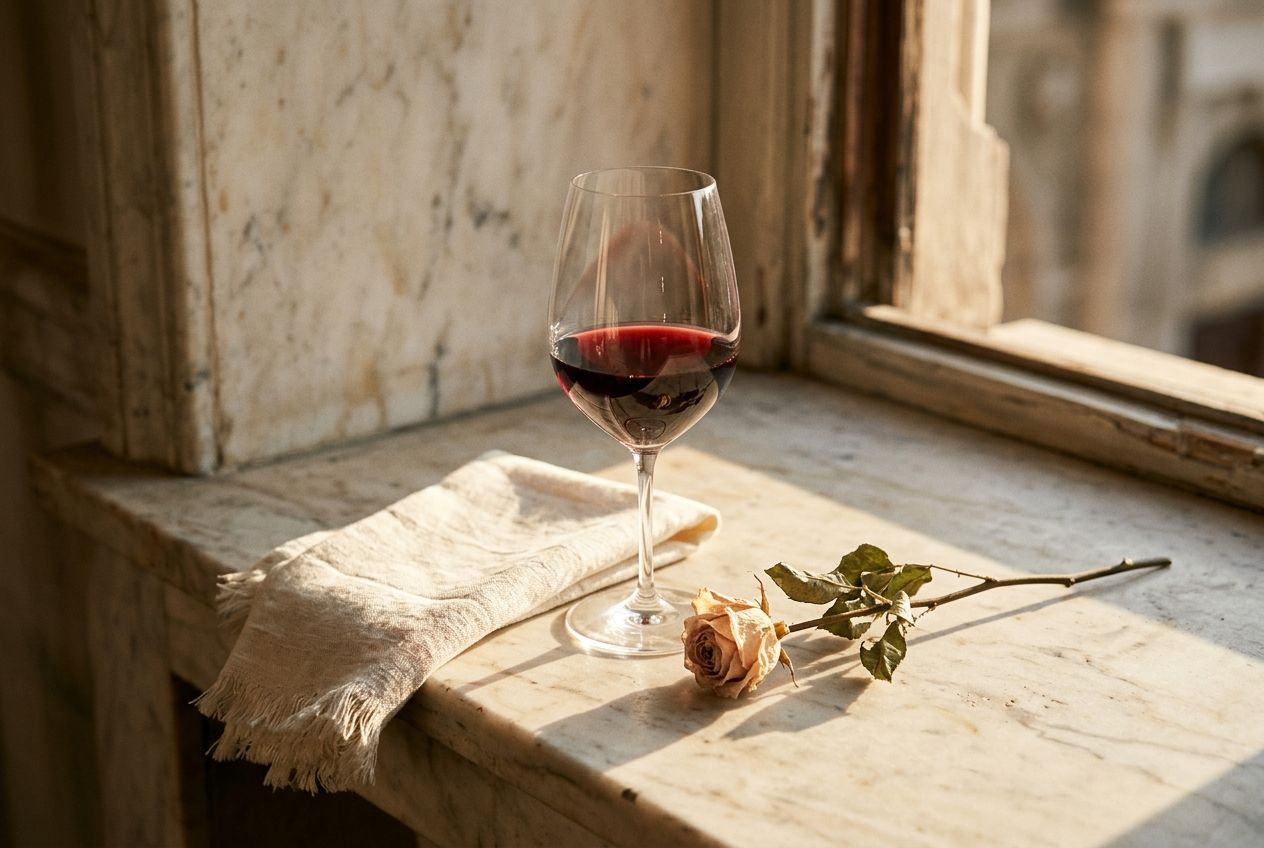
There are things I used to think I had to have. People I thought I had to explain myself to. Conversations I thought I had to finish. Messages I thought needed an immediate answer. Rooms I thought I needed to be invited into. And opportunities I was afraid to say no to because I had spent so much of my life wanting them.
I thought this was ambition. Sometimes it was. But sometimes, if I'm honest, it was something else. It was the inability to leave things alone.
I didn't have a word for it then. I do now.
Discernment. Not the sophisticated kind you read about in books. The human kind.
The kind you learn after being disappointed enough times to understand that not everything you desire is good for you. And not everything you lose is a loss.
I learned it slowly. I learned it in relationships. In the painful space between what someone said and what they actually did. In the moments when I wanted an explanation more than I wanted peace. In the conversations where I kept trying to be understood by someone who had already decided not to understand me.
There is something deeply human about that. We want closure. We want the last word. We want people to know our side. We want to correct the misunderstanding. We want to be chosen.
And sometimes we keep reaching — not because the relationship is nourishing us, but because our nervous system has become attached to the uncertainty.
That was one of the hardest things for me to understand. Intensity is not always intimacy. Sometimes what feels like chemistry is simply unpredictability. Sometimes what feels like love is the hope of finally receiving what we have been waiting for.
And sometimes the most loving thing we can do is stop asking a person to give us what they have already shown us they cannot.
That is discernment too. Not punishment. Not pride. Not pretending you don't care. Simply seeing clearly.
The easiest way I know to practise it is the pause. The decision that comes from clarity rather than from the discomfort of the moment. That small pause can change a relationship. A friendship. A business decision. A marriage. A career. Sometimes, an entire life.
Discernment is also knowing when to say yes. This is important. Discernment isn't becoming cold. It isn't becoming suspicious. It isn't turning into someone who says no to everything and calls it boundaries.
Quite the opposite. A discerning person can say yes wholeheartedly because they are no longer saying yes automatically. They can love deeply because they are not confusing love with losing themselves. They can enter a room without needing the room to validate them. They can accept an opportunity without needing every opportunity. They can admire another person's life without abandoning their own.
That is freedom.
I've also learned that desire is a terrible decision-maker. Desire is beautiful. It makes us alive. It makes us fall in love. It makes us build companies, families, friendships, homes and dreams. But desire doesn't always know what it costs. It sees tonight. Discernment remembers tomorrow.
That is why sometimes the most powerful thing you can do is leave something you desperately want untouched. The second glass. The late-night message. The conversation that is already becoming ugly. The person who keeps giving you just enough to keep you hoping. The opportunity that looks extraordinary on paper but quietly asks you to become someone you don't want to be.
You can want something desperately — and still decide: not this.
There is a human dynamic underneath all of this. We are social creatures. We are wired to seek belonging, approval, certainty and connection. So saying no can feel like rejection. Leaving can feel like failure. Silence can feel like weakness. Missing out can feel like losing.
But the more you practise discernment, the more your brain learns something different: I can survive not being chosen. I can survive disappointing someone. I can survive an unanswered question. I can survive walking away.
And something extraordinary happens after that. You become less afraid. You stop negotiating against yourself. You stop making decisions simply to relieve the discomfort of the moment. And slowly, almost imperceptibly, you begin to trust yourself.
That, to me, is the real reward. Not having a perfectly curated life. Not having impeccable boundaries. Not always making the right decision. But knowing that when something matters, you can sit quietly with yourself long enough to hear what you actually think.
Perhaps this is the simplest practice. Before you say yes, ask: do I actually want this — or do I want to be wanted? Before you reply, ask: am I responding — or reacting? Before you stay, ask: am I choosing this — or am I afraid to leave it? Before you pursue something, ask: does this belong in the life I am trying to build? And before you say no, ask: am I protecting my peace — or protecting my ego?
You won't always get the answer right. None of us do. Discernment isn't about becoming infallible. It is about becoming more honest with yourself.
And perhaps that is why it becomes more beautiful with age. You begin to understand that your life cannot hold everything. Not every person. Not every invitation. Not every opportunity. Not every argument. Not every desire. And that isn't deprivation. It is design.
There is a particular kind of peace that arrives when you stop reaching for everything. You don't need to prove that you could have had it. You don't need everyone to understand why you left. You don't need to announce every boundary. You don't need to turn every goodbye into a lesson for the other person.
Sometimes you simply know. You smile. You put it down. And you walk home.
Perhaps that is what discernment really gives us. Not a smaller life. A life with enough room for the things that are actually ours. The people we love. The mornings we don't rush. The conversations that make us feel more human. The work that feels meaningful. The relationships where we don't have to perform. The version of ourselves we are still becoming.
And the quiet knowledge that we did not give our entire life away simply because someone asked for a piece of it.
I think that is worth practising. Not perfectly. Just daily. A pause before the reply. A no without guilt. A yes without fear. A little less proving. A little more listening.
And every now and then, the courage to look at something beautiful — something you could have, something you deeply want — and quietly say:
"It is beautiful. But it isn't mine."
And then keep walking. That is not giving something up. That is choosing your life.
— Rajdeep Brar · T.A.L.K. The Analog Life Kintsugi
If this landed
The pause is easier to practise out loud, with someone listening for the pattern.
Book a SessionNext letter