
18 May 2026 · 4 min read
The crack was never the flaw
Why the thing you've been hiding is the most valuable part of the object.
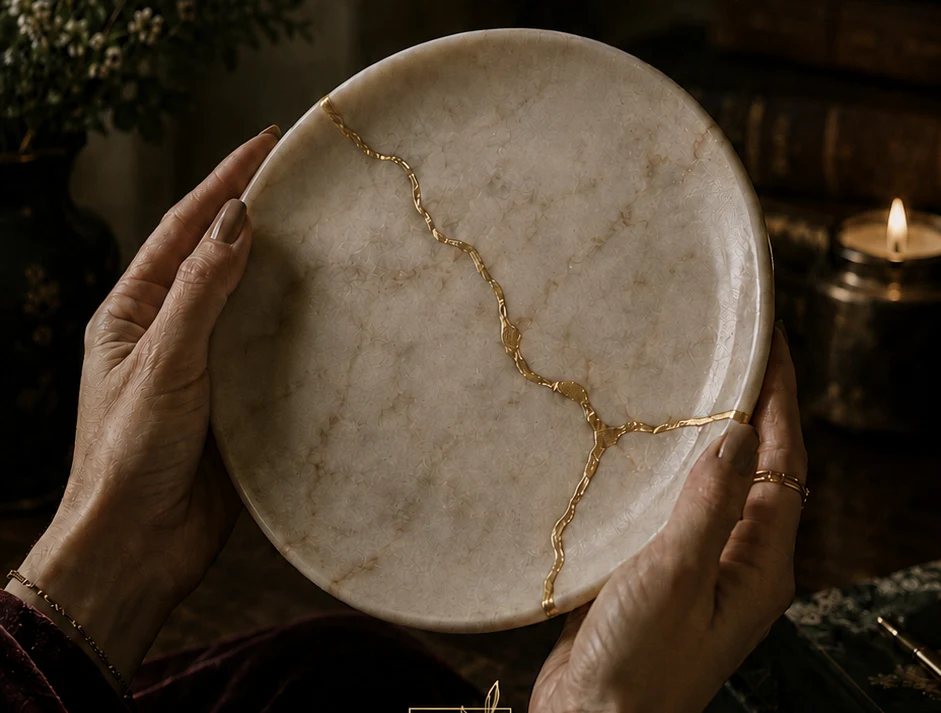
In Japan, when a treasured bowl breaks, it isn't thrown away and it isn't glued back invisibly. It's mended with lacquer dusted in gold. The repair is left visible on purpose, and the object becomes worth more than it was before it fell.
Most of us do the opposite. We spend years learning to hide the seam — the divorce, the year we lost, the thing we did at twenty-three that still makes our stomach drop. We get very good at the invisible repair. And then we wonder why the object feels fragile.
The pattern is the same in a life as it is in ceramics. What breaks you open is not the flaw. The flaw is pretending it didn't happen. Kintsugi — the analog life — is what happens when you stop sanding the crack down and start tracing it in gold.
This isn't optimism. Nobody is asking you to be grateful for what hurt. You are only being asked to stop lying about where the line runs. Once the line is visible, it stops being a secret you maintain — and maintenance was always the exhausting part.
Try this: name one seam out loud this week, to one person, without softening it. Notice that the object holds.
If this landed
The pause is easier to practise out loud, with someone listening for the pattern.
Book a SessionNext letter